Breast Reduction for Men in Washington, D.C.











Some men have enlarged breasts due to weight gain or a genetic condition called gynecomastia. Male breast reduction surgery in Washington, D.C. at West End Plastic Surgery is a safe and effective procedure.
Dr. Paul G. Ruff IV, Dr. Amir Arsalan, and our team of surgeons work with you to determine the best way to decrease the size of your breasts and enhance your chest’s appearance.
If you feel self-conscious and are looking in Washington, D.C. for a surgeon to perform male breast reduction, request a consultation online.
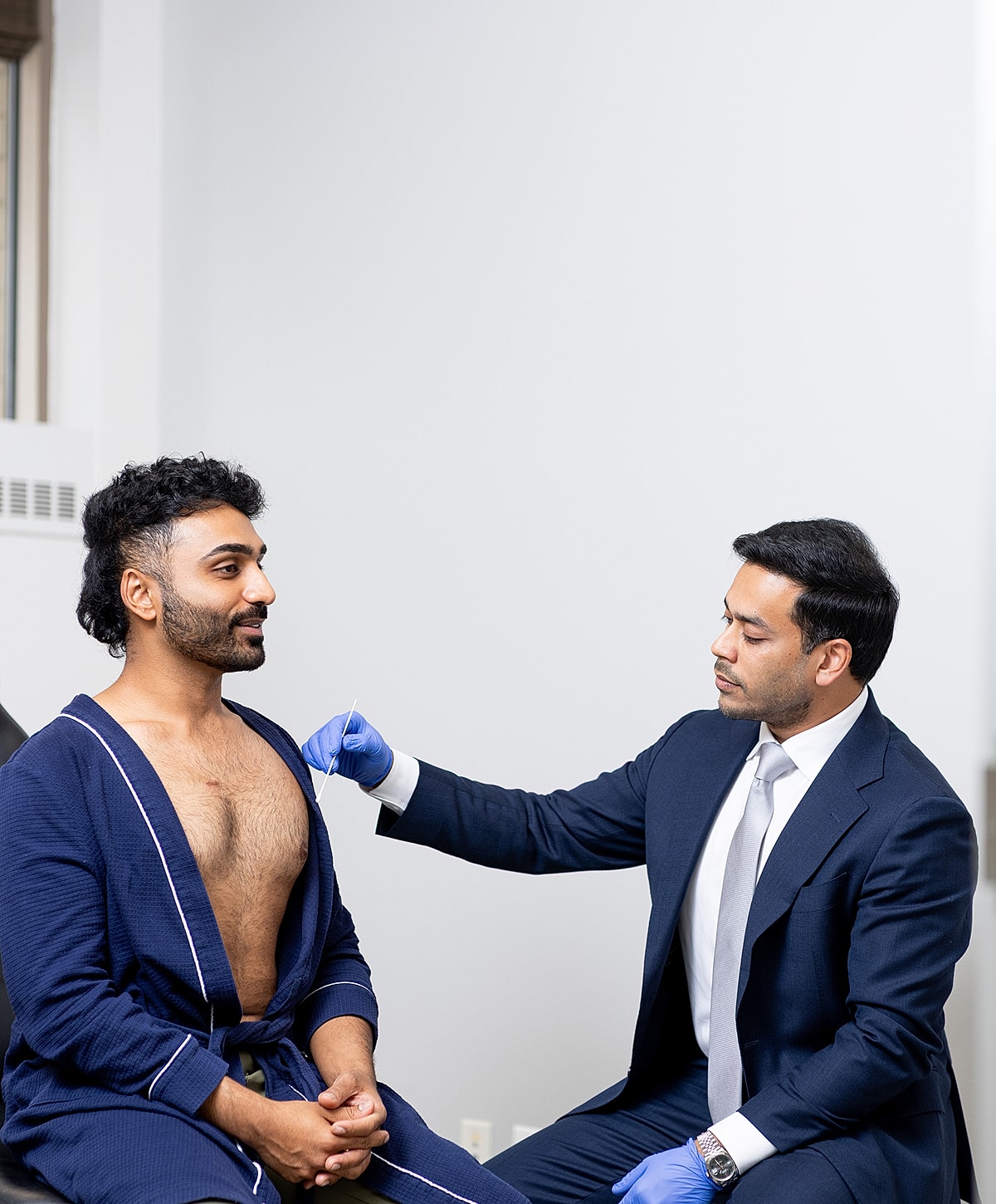

Gynecomastia is a condition that results in the overdevelopment of fat deposits in male breasts. These growths resemble the appearance of female breasts, resulting in a lack of confidence and self-esteem issues in men. This is a common condition that most commonly occurs in teenage boys due to hormone changes but can continue into adulthood. Gynecomastia is often attributed to excess weight and many men do not seek treatment. Unfortunately, a good diet and exercise are not a solution to male breast development. The best treatment for this condition is male breast reduction.
1 of 7
We’re as thrilled with our patients’ results as they are. Check out our before-and-after photo gallery and see for yourself the kind of work our talented surgeons do.


Gynecomastia is often attributed to excess weight gain. The main symptom of this condition is the development of breast-like growths on the male chest.
In many cases, gynecomastia is presented as a rubber-like firm mass of flesh beneath the nipple. Male breasts tend to be more sensitive than usual, and measure at least two inches in diameter. If you experience any of these symptoms, and cannot seem to get rid of male breasts after weight loss, you may suffer from gynecomastia.
Gynecomastia can occur either in the teenage years or when men reach middle age and above.
Both ages are a time of fluctuating hormones. Below is a list of possible causes and influences of gynecomastia in men:
Due to their heavy hormone concentration, steroids are a major cause of gynecomastia in men. Gynecomastia affects three out of four teenage boys. The high levels of estrogen and testosterone cause the fatty deposits to settle on their chests, leaving the appearance of breasts.

If dieting and muscle toning exercises haven’t reduced the size of your breasts and you are generally in good health, you may be an ideal candidate for male breast reduction surgery. Men from Alexandria, Reston, and throughout the D.C. region often choose surgery to correct gynecomastia. It’s important to understand the limitations of breast reduction surgery and to have a clear picture of what your chest area will look like after the procedure.
Before meeting with one of our Board Certified Plastic Surgeons at their plastic surgery office, you’ll want to be certain that your gynecomastia is not caused by another medical condition. Visit your family doctor to rule out any conditions, such as hormonal imbalances, that may be causing your enlarged breast tissue. Be aware that certain lifestyle choices, such as the use of steroids or marijuana, can also cause or contribute to enlargement of male breasts. If your family doctor or internist rule out any underlying medical cause for enlargement of your breast tissue, surgery could be an appropriate treatment path.
At your consultation, your surgeon will evaluate your chest area and breasts and review your cosmetic goals and expectations for male breast reduction and review all the options available to you.
Your surgeon and the team at West End Plastic Surgery will:
You will be asked to provide:
The cost of a Gynecomastia starts at around $6,500. The price will vary depending on the extent of treatment necessary to deliver your desired results.
During your consultation, our surgeons will assess your cosmetic goals and develop a treatment plan tailored to meet them. The starting price is provided for your convenience, and it is important to note that it does not encompass facility or anesthesia fees. The comprehensive cost, inclusive of all potential fees, will be confirmed during your visit.
We also offer financing options, including CareCredit® and Alphaeon®, to help you with the cost of your cosmetic surgery.

Your breast reduction procedure is performed in our on-site state-of-the-art surgical suite.
You’ll appreciate the additional care, attention, and safety of our surgical suite, where our surgeons have all the latest technologies and equipment updates available to serve your needs.
The procedure generally takes 1 to 2 hours to complete and may be performed either under general anesthesia or with local anesthesia with sedation. Our team does everything possible to ensure your comfort during the procedure and your happiness with the outcome.
If your enlarged breasts consist primarily of excessive fatty tissue, we may use VASERlipo™ liposuction. If excess glandular tissue is the primary cause, the tissue may be cut out with a scalpel. This excision may be performed alone or in conjunction with liposuction.
During an excision procedure, the incision is made either on the edge of the nipple (areola) or in the underarm area. The surgeon carefully removes excess glandular tissue, fat, and skin from around the pigmented area surrounding the areola and from the sides and bottom of the breast by working through as small an incision as possible. Major reductions that involve the removal of a significant amount of tissue and skin may require larger incisions and more visible scars, but it’s always our team’s goal to keep scarring to a minimum.
For liposuction-only breast reduction, your surgeon will likely make a small incision of less than a half-inch in length around the edge of the areola, or they may make the incision in the underarm area. You may feel a vibration or some friction during the procedure, but generally no pain.
Sometimes a small drain is inserted through a separate incision to remove excess fluids after the procedure is completed. Once closed, the area is covered with a dressing. The chest may be wrapped to keep the skin firmly in place.

Everyone heals at different rates, and you are the best judge of when you are ready for certain activities, but the following are general guidelines:
In most cases, you will be ready to go home shortly after the procedure. You will need to have someone drive you home after the surgery because you may be a bit sleepy after the anesthesia.
During surgery, your breasts will have been covered with a gauze dressing and a surgical compression garment to help hold your newly contoured chest in the correct position. A small tube called a drain may be inserted into each breast to help drain off excess fluid; you will be given instructions on how to care for the drains, which are removed within a few days of surgery.

During the first 24 to 48 hours after your procedure, you may feel tired from the anesthesia and sore from the surgery. Dr. Ruff and Dr. Arsalan may prescribe pain medication to alleviate much of the discomfort, although most patients require only Tylenol. Your discomfort level will improve rapidly after the first 2 days.
You can take a shower or bath the day after your surgery; however, don’t let the bandages covering your incisions get overly wet. If drains were inserted, you can take a shower or bath as soon as the drains are removed, usually in about 2 to 3 days. You can take off the surgical corset placed over your breasts after the surgery during your shower or bath, but it must be worn at all other times (even while sleeping) for the first 2 weeks after your surgery.
You will notice a marked improvement in your comfort level during the first few weeks after your surgery:
You should sleep on your back for the first week after surgery to help keep your chest in the correct position during initial healing. Placing pillows on either side of your body often helps ensure that you do not roll onto your side while sleeping.
During the first 2 weeks after surgery, you should also:


As with any surgical procedure, there are risks associated with male breast reduction. During your initial consultation at our Washington, D.C. plastic surgery office, Dr. Ruff and Dr. Arsalan will review these risks. As with any surgery, you can help reduce the risks of the procedure by closely following the instructions provided to you by Dr. Ruff, Dr. Arsalan, and the staff of West End Plastic Surgery, who will be with you every step of the way to ensure that your procedure goes smoothly and that you have the outcome you desire.
Most likely risks include the following:
The results of your breast reduction are permanent. However, weight gain may cause the breasts to appear larger again. Keep in mind that aging will also continue to have an effect on the body.
Interested in treating your gynecomastia with male breast reduction surgery?
Serving the Arlington and Reston areas in addition to Washington, D.C., we invite you to request a consultation online tor call our office at (202) 785-4187 to schedule a consultation.